
Less manual work
Automate repetitive steps, status updates and notifications.
Replace scattered spreadsheets and repetitive manual work with one system built around your actual process.
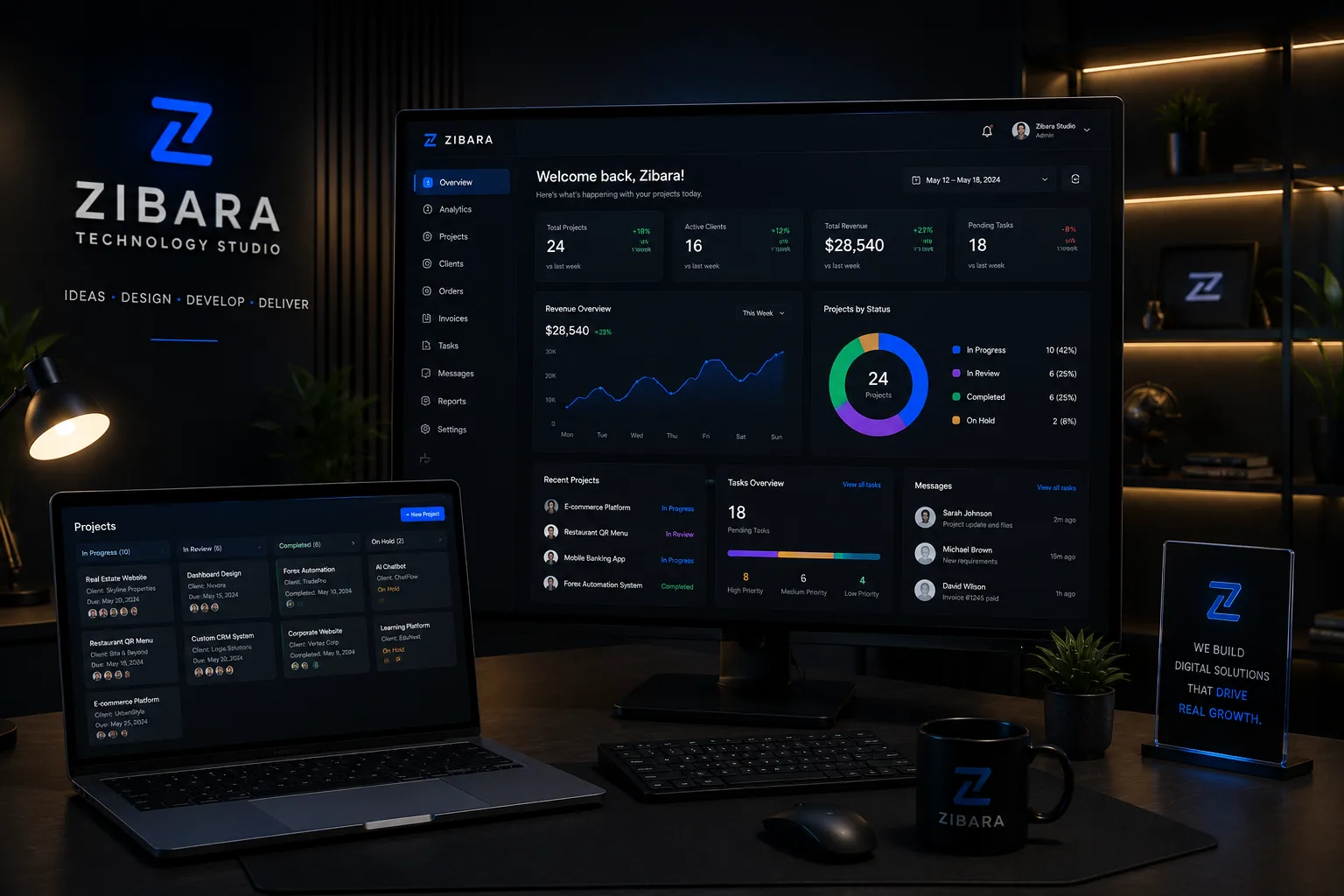
Off-the-shelf tools can force your team into workflows that do not fit. We map the way your business operates and build the roles, screens, automations and reports needed to run it more clearly.
Automate repetitive steps, status updates and notifications.
Keep customers, orders, bookings and operations in one system.
Dashboards and reports that reflect the metrics you actually use.
Roles and permissions designed for staff, managers and partners.
The final scope is confirmed in the project proposal, but the service may include the following depending on your needs.
Workflow analysis and requirements map
Role and permission design
Custom dashboard and user interfaces
Database and secure backend
CRM, booking, inventory or operations modules
Notifications and third-party integrations
Data import and export tools
Documentation, training and support
Teams relying on spreadsheets and manual follow-up
Hotels, transport, property and service operations
Businesses needing a custom CRM or booking flow
Companies connecting several existing tools
We document what happens from the first customer request to completion, payment and reporting. Features are then designed to remove bottlenecks and reduce duplicated work.
A technically powerful system still fails if daily actions are confusing. We keep common tasks visible, reduce unnecessary fields and align terminology with your operation.
Large systems can be released module by module. This lets the team begin using essential functions earlier and reduces the risk of building features before they are validated.
People, actions, data, pain points and dependencies.
Modules, permissions, data model and integrations.
Working modules delivered and reviewed in milestones.
Data validation, roles, edge cases and performance.
Training, controlled launch and continued improvement.
These answers explain the general service; the project proposal defines the final scope.
The estimate is based on workflows, user roles, modules, integrations, data migration and support needs. Discovery may be required before a reliable fixed scope is possible.
Often yes, when the existing service provides a suitable API or export method. Integration limitations are reviewed before commitment.
Yes. The system is planned with clear modules and maintainable code so future phases can extend the product.
Ownership of the agreed custom deliverables transfers according to the project agreement after full payment, while reusable libraries and third-party components keep their existing licenses.